The construction labor shortage in 2026 has not gone away, even though demand for many types of projects has softened. The latest workforce survey from the Associated General Contractors of America (AGC) and NCCER shows most responding firms still have open positions they struggle to fill, and worker shortages remain the most common reason for project delays.
This article summarizes what the 2026 survey found, why construction workers are still hard to find, how the shortage affects projects and bids, and practical steps small contractors and estimators can take. It is written for US contractors first, with a section on the construction labor shortage in Australia at the end.
Construction Labor Shortage 2026: What the Latest Survey Shows
The AGC and NCCER ran their annual workforce survey in July and August 2026. A total of 1,830 individuals from a range of firm types and sizes responded to at least part of it. Published on September 3, 2026, the AGC/NCCER Workforce Survey provides a recent nationwide snapshot of construction hiring conditions. Response totals vary by question. Below are its main findings on the construction workforce shortage in 2026 and the construction hiring challenges firms reported.
Key construction labor shortage statistics from the survey (AGC/NCCER 2026 Workforce Survey Analysis.pdf)):
- 87% of responding firms report openings for hourly craft workers.
- 82% report openings for salaried positions.
- 88% of firms with craft openings say those positions are as hard or harder to fill than a year ago, and 87% of firms with salaried openings say the same.
- 73% expect to add employees in the next 12 months, while only 8% expect to reduce headcount.
- 42% say shortages of their own or their subcontractors' workers have delayed projects, making worker shortages the most listed reason for delays.
These are survey findings from responding firms, not measurements of every US contractor. They are still a strong signal: even in a slower market, most firms that answered are short of people.
Why Are Construction Workers Still Hard to Find?
The survey points to several overlapping causes of the skilled labor shortage in construction:
- Candidates lack the right skills. 50% of respondents say available candidates are not qualified because they lack essential skills or the right certificate or license. That is down from 57% in the previous survey but is still the most cited reason positions are hard to fill.
- Retention, not just recruitment. 42% report that new hires fail to show up or quit shortly after starting.
- Competition from data centers. Among firms reporting on data center effects, 58% say data center projects have increased competition for skilled workers and 49% report increased wage pressure (AGC News).
- Immigration enforcement. Around 29% of respondents report at least one direct or indirect impact from immigration enforcement in the previous six months. It is one contributing factor among several, not the sole cause.
Wage pressure follows from all of this. The survey reports that many firms raised base pay for both hourly craft and salaried staff by more than they did a year earlier.
Why Some Contractors Are Cutting Staff While Others Cannot Hire
One finding looks like a contradiction at first. 37% of respondents cut headcount by at least 5% in the past 12 months, compared with 34% that increased headcount by at least 5%. Yet 73% plan to hire over the next year.
One important explanation is uneven construction demand. AGC reports that some sectors have softened while data center work continues to compete for qualified workers. Differences in trade, location, qualifications and project timing can also contribute to the mismatch. A firm can trim staff in one area and still be unable to find a qualified foreman, electrician or estimator for another. We covered the demand side in more detail in our Construction Outlook 2027.
How Labor Shortages Affect Construction Projects and Bids
The construction labor shortage's impact on projects shows up in a few predictable places:
- Schedules. If your crews, or your subcontractors' crews, are short, durations stretch. Only 26% of survey respondents report no significant project delays.
- Labor rates. Higher wages and turnover feed straight into labor pricing. A rate that was right last year may not be right now.
- Subcontractor availability. A low sub quote is only useful if that sub can actually staff the job when you need them.
- Productivity. New or less experienced crews can take longer on the same scope.
Labor is only part of the picture. Materials and freight costs have also risen this year, which we covered in Construction Material Prices 2026. Together, they make it riskier to bid on old assumptions.
Are Estimators and Project Managers Also in Short Supply?
Yes. The AGC/NCCER 2026 Workforce Survey found that 72% of responding firms with openings for estimating positions reported difficulty filling those roles. For project managers and supervisors, the figure was 74%, and for superintendents it was 75%.
These figures measure recruitment difficulty among firms with vacancies, not the proportion of all US construction companies lacking estimators.
For small contractors, the findings reinforce the importance of making the most of existing estimating capacity. Reducing repetitive measurement and spreadsheet administration can free up time for pricing, subcontractor coordination and bid reviews.
Five Ways Small Contractors Can Respond to Workforce Shortages
- Bid selectively. Focus on work you can actually staff and deliver. A full backlog of jobs you cannot crew is a risk, not an asset.
- Check subcontractor capacity before you rely on a price. Ask when they can start and how many people they can commit, not just what they charge.
- Price labor realistically. Use current wage rates and allow for productivity on the crews you actually have.
- Build realistic schedule allowances. Where the drawings and contract allow it, reflect labor availability in your program rather than assuming ideal durations.
- Cut repetitive office work. Time spent on manual measurement, retyping quantities and redoing calculations is time not spent on pricing, procurement or site problems.
Before you submit, run through our construction takeoff checklist so a rushed bid does not miss scope.
How to Prepare Construction Takeoffs With a Lean Estimating Team
With 72% of surveyed firms that had estimating vacancies reporting difficulty filling them, reducing repetitive estimating administration is a practical priority for contractors operating with limited office capacity. When estimating time is short, the takeoff is often where the hours go. A simple, repeatable PDF workflow helps:
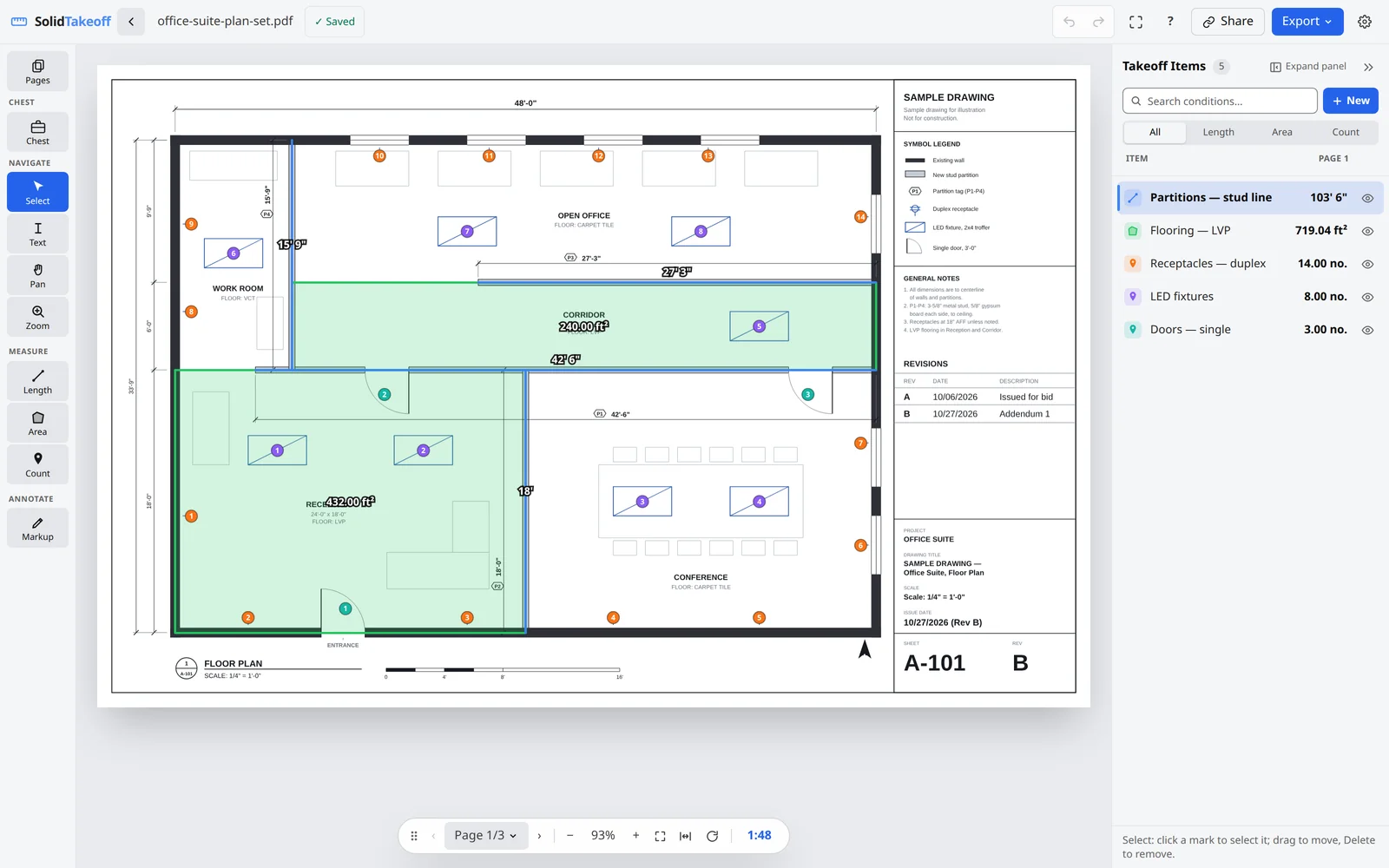
- Upload the PDF drawings and check the drawing scale against a known dimension on each sheet.
- Measure lengths, areas and counts directly on screen instead of with a scale ruler and highlighter.
- Organize quantities into named conditions (for example, by trade or item) so totals stay grouped.
- Export the quantities to CSV for your pricing spreadsheet, or as an annotated PDF to show exactly what was measured.
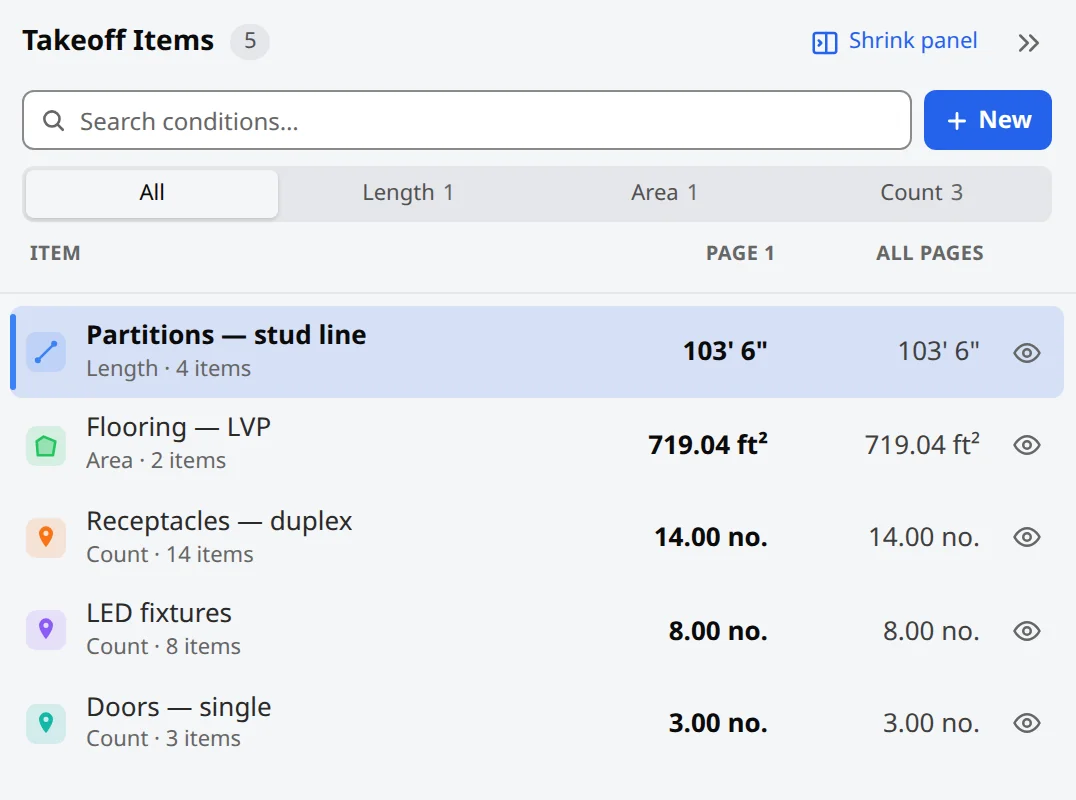
If you are newer to reading plans, start with how to read construction drawings for a takeoff, then follow our step-by-step guide on how to do a construction takeoff.
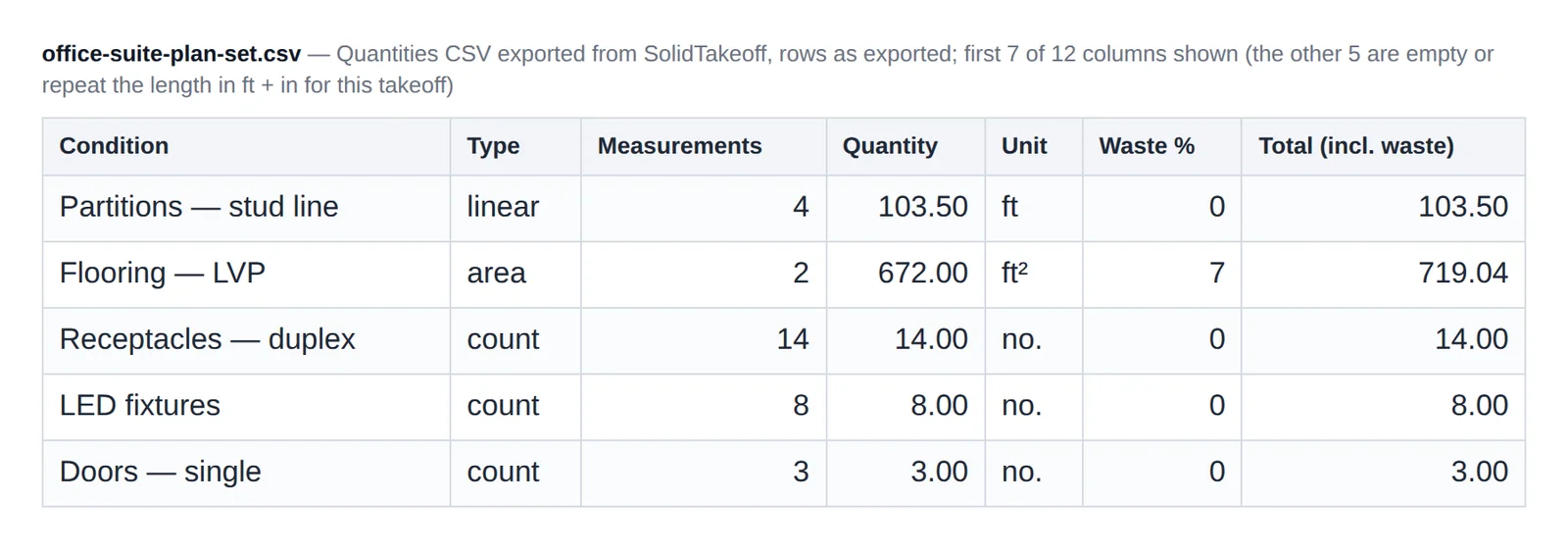
Takeoff software does not fix a skilled trade shortage, and it does not replace an estimator's judgment. SolidTakeoff provides browser-based measurement tools, named conditions and quantity exports that can reduce repetitive manual measurement and data entry. Actual time savings depend on the drawings, scope and estimator's workflow.
Australia: Construction Workforce Shortages and the Housing Target
The construction labor shortage in Australia is closely tied to housing. BuildSkills Australia's Housing Workforce Capacity Study, released in September 2025, estimates that an extra 116,700 residential construction workers, about 25% above business-as-usual projections, would be needed to meet the National Housing Accord target of 1.2 million new homes by 2029 (The Urban Developer).
That figure is a modeled requirement under the study's assumptions, not a count of current vacancies. The study points to apprenticeships and VET training, greater female participation, targeted skilled migration, productivity improvements and expanded training capacity as the main levers (HIA).
For Australian builders and subcontractors, the advice above applies in metric: calibrate PDFs against millimeter dimensions, measure in the units your tender documents use, and check that quantities line up with any bill of quantities on larger projects.
Short on Estimating Time?
Measure lengths, areas and counts directly from PDF drawings, organize quantities by trade and export them for pricing. Try SolidTakeoff free, no credit card required.
The free plan includes 1 active project and 3 drawing uploads in total. Solo is $12.99 a month, and Team is $49.99 a month for three users, then $16.99 per extra user. Full details are on the pricing page.
Frequently Asked Questions About the Construction Labor Shortage
Is there still a construction labor shortage in 2026? Yes. In the AGC/NCCER 2026 Workforce Survey, 87% of responding firms reported hourly craft openings and 82% reported salaried openings, and most said those roles were as hard or harder to fill than a year earlier.
What is causing the construction worker shortage in the USA? The survey points to a lack of qualified candidates, new hires who do not stay, competition from data center projects and, for about 29% of respondents, immigration enforcement impacts. No single factor explains it.
How does the labor shortage affect construction projects? 42% of respondents said worker shortages had delayed projects, the most listed reason for delays. Shortages also push up labor rates and make subcontractor availability less certain.
Is there a shortage of construction estimators? In the AGC/NCCER 2026 survey, 72% of responding firms with estimating openings reported difficulty filling those positions.
Why are some contractors cutting staff if there is a shortage? Demand is uneven. Some sectors have slowed while others, such as data centers, are competing hard for skilled workers. 37% of respondents cut headcount by at least 5% in the past year, yet 73% plan to hire in the next 12 months.
Is there a construction labor shortage in Australia? BuildSkills Australia estimates that about 116,700 additional residential construction workers would be needed to meet the 1.2 million homes target by 2029, roughly 25% above business-as-usual projections.
Sources: BuildSkills Australia; AGC/NCCER 2026 Workforce Survey Analysis.pdf); AGC News, September 3, 2026; The Urban Developer, September 22, 2025; HIA, September 19, 2025.